Showing posts with label Insects. Show all posts

Wednesday, 25 November 2015

Pollinators

After being inspired doing the illustrations for the NZ Gardener Plan Bee Campaign  I have been noticing the pollinators in my and others gardens a lot more.
 The macro lens provides a close up view of the intricacies of these vitally important insects at work.

Monday, 2 February 2015

Planting Underway

The new japanese inspired water courtyard is about 90% complete with planting undertaken in late spring.  Just a few more rocks and pebbles to add to hide pond liner and a year for the plants to mature.  Here is the plant list for the garden – a blend of native and exotic species with predominantly green on green with occasional silver and white colour scheme:

Exotic
Zephyranthes candida (white rain lily)
Anemone hupehensis var. japonica
Juniper (cascade style bonsai)
Lomandra longifolium ‘Tanika’

Native
Sporadanthus ferrugineus
Pimelea prostrate
Selliera radicans
Selliera microphylla
Coprosma prostrata
Coprosma ‘Red rocks’
Pittosporum ‘Humpty dumpty’
Pittosporum ‘Golf ball’
Clematis ‘Purity’ 
growing up existing large Silver weeping pear (Pyrus salicifolia ‘Pendula’)

 Old basalt curbstones and concrete pavers form edge of pond and stepping stones.
 Clematis growing up rusty chain into Weeping silver pear
 View down onto garden from balcony
 The dappled light on the deck from weeping silver pear is delightful and perfect for the lounger.
 And in my view you can't have a pond without a white nymphaea.


The little Selliera is starting to do its thing and grow through the pebbles and interlace with the Pimelea prostrate.  I envision a mixed tapestry of plants.
 The lounger is the new favorite spot, late afternoon with glass of wine.
Porters liquid rust paint used for planter and plywood fence panels to give that rustic rusty backdrop.
 A small bubbler provides that wonderful sound of water.
 And the area has become a haven for wildlife already.

Dragonflies are frequent visitors.
And within a few days of filling with water a golden bell frog (named Lord Nelson) took up residence.
And the skinks are slinking in and out of the rocks and pebbles.


Saturday, 27 September 2014

A Garden Close Up


A generous lend of a macro lens from Jack Hobbs at the Auckland Botanic Gardens for my trip to the rainforests of Borneo has ensured a new addition to the ‘must have’ list for Christmas.

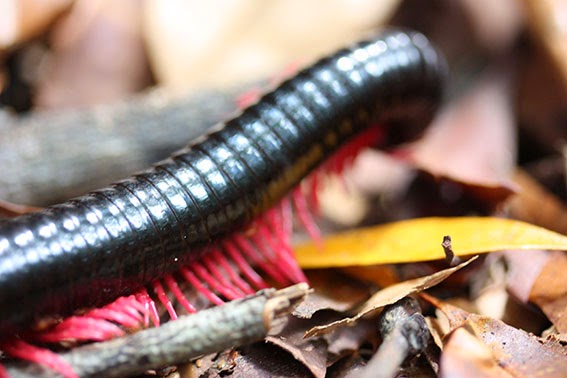
On return home from Malaysia where the focus of the lens was on miniature fungi hidden in the leaf litter and bizarre invertebrates (see below) I played around in my autumn garden – oh what a delight there is in seeing things from the perspective of a bee. 


It reminds me of the wise advice of an elderly gardener I used to visit as an 11 year old.  She had a large rambling garden full of roses and bulbs and some very sweet bantams (of whose eggs I always went home with).  Over a glass of lemonade and a biscuit, she would tell me to “always remember every day and all the tiny details of things – as one day I would wake and be her age (70+) with a wish to have spent more time observing and noticing the ‘beauty in little things’…


Wednesday, 8 August 2012

Morning Diversion


I was pleasantly distracted this morning as I opened the gate to go to work - a delicate gossamer threaded web (strung between the bare winter branches of the Pin oaks) caught my eye in the morning fog.  It's nice on occasion to be reminded of the pleasure of stopping to notice the small things and the beauty and delicacy of the natural world - suffice it to say I had a lovely drive to work!

Sunday, 26 February 2012

A Plateful of Pink


I'm totally and utterly smitten with the Sedum 'autumn joy' I planted last year in my pink and yellow garden.  They are such wonderfully large clouds of gorgeous pink flower heads which then fade to autumnal rust and burgundy as the summer sun wanes.  As you can see from these photos, they are also an absolute feast of delight for insects, in particular the many bumblebees which frequent my garden.  They are the perfect landing pad for their heavy nectar laden bodies.  Count how many on just this one flower head...


I'm so impressed with the display that i'm re-thinking this whole garden bed, and will in autumn remove some of the existing planting and create a massed triptych of sedum, yellow flowered perennials and grasses.  I love the notion of a sea of pink sedum flowers floating amidst a sea of wavering grass dotted with yellow.


I first saw these sedums in New Zealand at the gorgeous Queenstown Airport planting (see photo below), designed by Blakely Wallace Associates Landscape Architects.  Nestled under the Remarkables the planting design at the airport is a wonderful example of how public plantings don't have to be boring or lacking in color and vibrancy.  The sedums, mixed in with native plants link beautifully to the rusty, sunlit slopes of the Remarkables and inspired me to try the sedums in my own garden.


Wednesday, 15 February 2012

Purple Haze


I have one clematis in my garden currently, and it has proven itself to be the most fantastic ambassador for the genus that I am now plotting the location of at least 6 new varieties.  I had always been under the impression that clematis were particularly difficult to establish, but this large purple beauty is proving my assumptions wrong.  Mind you, I have obeyed the rules of leaving well alone and not disturbing the roots.  In fact, I don't cut back the dead branches either - I just leave it to do it's thing.  I'm thinking of trying some of the new varieties sprawling up into my boughs of my orchard fruit trees - a romantic vision of orchard gorgeousness!


It's funny how my garden journey keeps being triggered by memory - and searching through my folios the other day, I found a water-colour painting that I did in a botanical painting course at the English Gardening School based at the Chelsea Physic Garden in London.  What dim and distant images must have been in play when I chose my purple giant - to bring back memories of that moment in time.


The bumblebees love the large plate-sized flowers and hang out on them for hours.  I'm going to spend many glorious hours deciding on my new range of clematis from Yaku nursery in Taranaki - a specialist clematis grower and supplier.  


Monday, 16 January 2012

Lily Late Arrivals


I planted a group of christmas lilies outside my kitchen window nearly 6 years ago and every year since then, without fail they have bloomed profusely just in time for christmas day.  This year, for the first time they were two weeks late!  However, they are easily forgiven, because as usual their display of fragrant white trumpets has been spectacular.  Even the little native solitary bees (look closely in the photo) have been enjoying their nectar.  I am planning to complete the front garden (currently a messy clay unfinished garden) this year and have plans for a mass planting of christmas lilies to frame a green rectangle of lawn. The intention is a purely white and silver garden with water feature, I have visions of Sissinghurst and Vita Sackville-West has been an inspiration for my garden as I visited there as a young landscape architect  and was inspired by the way she linked nature, gardening and poetry into one delightfully serene and comfortable landscape.  I like to think that the initial inspiration for her now famous white garden was derived from her love of nature and poetry, she loved walking at dusk and in darkness and was enchanted (as am I) by the luminescent quality that white flowers have at night.  Vita had a strong poetic vision of what the white garden would be, as she stated "I cannot help hoping that the great ghostly barn owl will sweep across a pale garden... in the twilight".  I may not have a ghostly white barn own to swoop over my moon (white) garden but the local Moreporks that call each night outside my window might oblige   - watch this space...


Vita's love of barn owls is reflected in this lovely poem...

Each dusk I saw, while those I loved the most
Chattered of present or of alient things.
The rhythmic owl returning like a ghost
Across the orchard cruising on wide wings.

She went, she came, she swooped, she sought the height
Where her young brood hid snoring for the mouse;
Tirelessly weaving on her silent flight
Between the laden branches and the house.


Creation of Living Roof

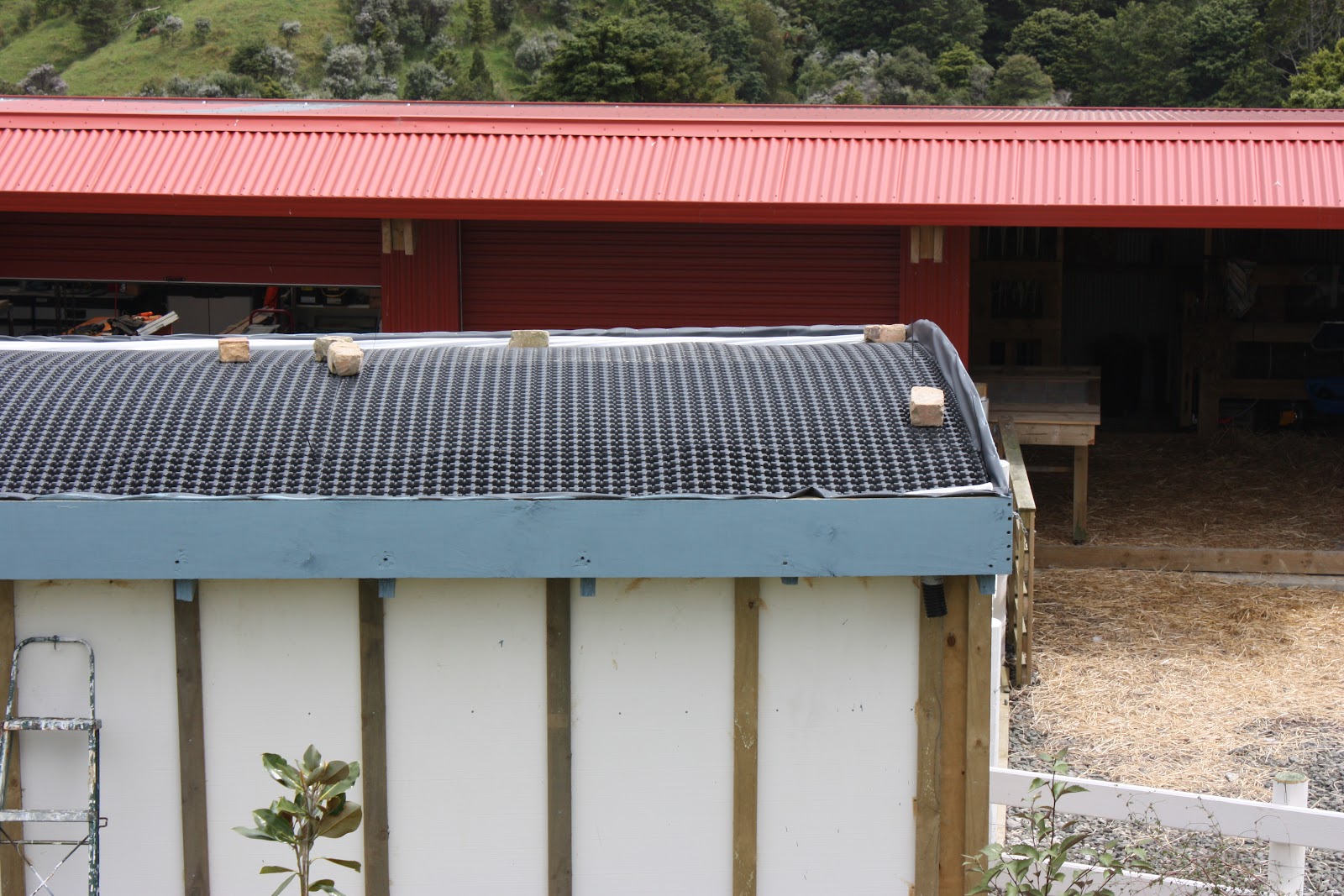
The following images show the stages in creation of a living roof on my shepherds hut sleep out.  I implemented the living roof myself and it was remarkably easy to achieve following  Dusty Gedge Living Roof DIY Guide.  The result is a stunning vegetated roof which not only provides great insulation for the sleep-out, but is proving to be a popular insect habitat and I think it looks fantastic.  I am now keen to have a living roof on any and every roof at the farm that I can manage - i'm a total living roof convert!

Structural roof beams

Plywood base to roof

Layer of pond liner

Adding timber edging and bringing liner up edge

Thin drainage layer added (Versidrain) - retains some water 

Adding substrate and plants (mix of sedums and succulents)

Completed living roof

View across living roof

Shepherds hut with living roof (plants peeping over edge)

Self seeded native orchid

A great habitat for bees and other insects